
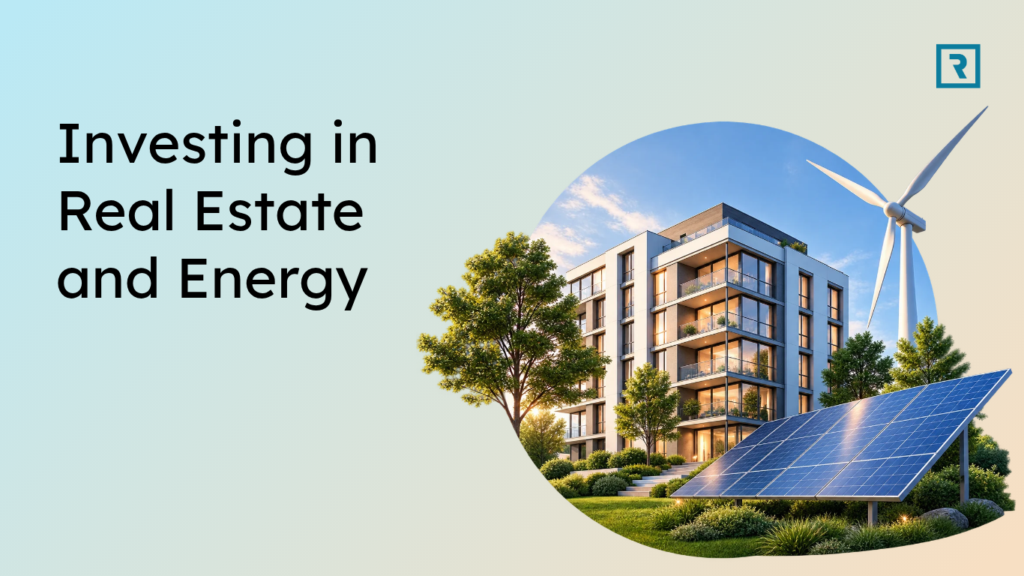
For a long time, traditional investing was relatively clearly divided: real estate was considered a tangible asset, stocks represented ownership in companies, and bonds were seen as a more defensive part of a portfolio. However, with the growth of renewable energy, another asset class has increasingly come into focus. Energy infrastructure, particularly photovoltaics, is developing from a purely sustainability-focused topic into an economically relevant investment sector.
The figures show how large this market has become. According to the International Energy Agency (IEA), investment in clean energy in the European Union reached almost USD 390 billion in 2025. In 2024 alone, around USD 95 billion was invested in solar energy. At the same time, the cost of photovoltaics has fallen significantly since 2015: by more than 50 percent for rooftop systems and by around 40 percent for large-scale solar installations.
For investors, this raises an increasingly interesting question: Do you have to choose between real estate and energy – or does the real opportunity lie in combining these two tangible assets?
Why are tangible assets attractive to investors?
Tangible assets differ from many financial products because the investment is backed by a physical asset. In real estate, this is the building and the land. In photovoltaics, it is the technical infrastructure used to generate electricity.
The economic value does not come only from the expectation of selling the asset at a higher price in the future. Both can generate ongoing income during the holding period.
This makes tangible assets particularly interesting for long-term investors. At the same time, the term “tangible asset” should not be confused with a “safe investment”. Property prices can fall, tenants may fail to pay rent, buildings require maintenance, and photovoltaic systems depend on factors such as electricity prices, technical performance, regulation and location.
This is exactly why diversification is so important. Instead of making the entire investment dependent on the performance of a single asset, combining different assets can bring together different sources of income.
How does real estate work as an investment?
For a rented property, ongoing returns generally come from rental income. This is balanced against costs such as financing, management, maintenance, operations and, where necessary, modernization. In addition, the market value of the property may change during the holding period.
This creates two potential components of economic performance: ongoing income from the use of the property and potential long-term value appreciation.
Long-term market data also shows that real estate continues to play an important role as an asset in Europe. According to Eurostat, property prices in the EU increased by a total of 63.6 percent between 2015 and the third quarter of 2025. Rents increased by 21.1 percent over the same period.
However, this development was far from linear. Property prices in particular went through periods of strong growth, decline and stagnation. This shows why historical increases in value cannot simply be assumed to continue in the future.
For a real estate investment, the key question is therefore not only whether to invest in real estate, but which properties to invest in. Location, type of use, purchase price, occupancy, financing and professional asset management can all have a significant impact on the actual economic performance.
How does photovoltaics work as an investment?
With photovoltaics, the principle is different. A photovoltaic system produces electricity and therefore creates an economically usable resource. The electricity generated can, for example, be used directly, stored, shared, or fed into the public grid and sold.
In simple terms, an investor is not investing in a building that is rented out, but in infrastructure that produces energy.
The economic performance of a photovoltaic system depends on several factors: acquisition and financing costs, solar irradiation and location, the technical performance and availability of the system, ongoing operating and maintenance costs, as well as the price or contractually agreed compensation for the electricity generated.
This mechanism is exactly what makes photovoltaics interesting from an investment perspective. The source of income is fundamentally different from that of traditional real estate. An office building, for example, needs tenants, while a photovoltaic system generates its economic value through the energy it produces.
At the same time, the photovoltaic market continues to grow. The European Union is pursuing a major expansion of solar energy. The European Commission has set a target of at least 600 GW of solar PV capacity by 2030. At the same time, the revised Energy Performance of Buildings Directive is gradually introducing requirements for solar energy on certain new and existing buildings.
Real estate or photovoltaics – what are the differences?
At first glance, the two investments have little in common. One provides usable space, while the other produces electricity. From an investor’s perspective, however, they share one important characteristic: both assets can generate ongoing income through their real-world use.
The difference lies in where this income comes from.
With real estate, cash flow is primarily based on rental income and the use of the property. With photovoltaics, it is based on energy production and the economic value generated from it. This means that the two types of investment are partly influenced by different economic factors.
This is where diversification becomes particularly interesting. An investor who owns several apartments may be diversified across individual properties, but still remains highly dependent on the same factors: the real estate market, rental market, interest rates, regulation and local demand.
By combining different types of real estate with energy infrastructure, investors can spread their capital not only across multiple assets, but potentially also across different return models.
Why can combining real estate and energy make sense?
Diversification is often misunderstood. Having five different investments does not automatically mean that a portfolio is well diversified if all five react in a similar way to the same economic changes.
Diversification becomes more interesting when different assets generate their returns from different sources.
A hotel, for example, depends on occupancy rates, room prices and tourism. An office building generates income through commercial leases. Industrial properties are influenced by different demand and usage patterns. A photovoltaic system, on the other hand, produces electricity.
Combining these assets can therefore create several levels of diversification: across different properties, different types of use and different sources of income.
This does not mean that risks disappear. Instead, they are spread more broadly. That is the basic idea behind a diversified investment strategy.
Real estate and energy are also becoming increasingly connected
The combination of real estate and energy is not only interesting from a portfolio perspective. The two areas are also becoming increasingly connected at the building level.
Traditionally, a building was mainly a consumer of energy. Today, with photovoltaics, battery storage, heat pumps and smart energy systems, a building can also produce, store and distribute energy.
This development is also being supported by regulation. The revised European Energy Performance of Buildings Directive requires new buildings to increasingly be designed for the use of solar energy. For certain new non-residential buildings, these requirements will already apply from 2027, with additional building categories following step by step. From 2030, new buildings in the EU are generally expected to meet the zero-emission building standard.
Over time, this is also changing how the economic value of a property is viewed. Energy efficiency and on-site energy production can increasingly become part of a building’s quality and usage concept.
What are the risks of real estate and photovoltaics as investments?
A serious comparison must consider the risks as well as the opportunities.
With real estate, vacancies, unexpected renovations, rising financing costs or changes in the local property market can reduce returns. Commercial real estate can also be affected by economic changes that influence demand and rental prices.
Photovoltaics comes with different risks. Technical problems can reduce production, actual electricity output may differ from forecasts, and changes in electricity prices or regulations can affect the economic performance of a project. Other important factors include the quality of the location, grid connection, maintenance and the technical lifetime of individual components.
Combining both asset classes does not remove these risks. However, it can help avoid a situation where the economic success of an entire investment depends only on a single property, a single type of use or a single source of income.
How does Rocksolid Estate combine real estate and energy?
This is exactly where the investment strategy of Rocksolid Estate comes in. Instead of giving investors economic exposure to only one individual property, Rocksolid follows a diversified approach across different types of real estate and tangible assets.
These include hospitality, office real estate, industrial properties and photovoltaic systems. The ROC Token brings this approach together under the principle “One Token. All Properties.”
This gives investors access to a broader asset strategy without having to select, purchase and manage individual properties or photovoltaic systems themselves. At the same time, Rocksolid combines real assets with digital investment infrastructure. The ROC Token is based on the Avalanche blockchain, with monthly distributions made in EURC.
The blockchain itself is therefore not the underlying asset. It serves as the technological infrastructure. The economic foundation is provided by the underlying real estate and tangible assets.
For anyone who would like to learn more about how this technical layer works, our article “Why more and more institutional projects are choosing the Avalanche blockchain” provides a detailed explanation.
Two tangible assets – but two different roles
The more interesting question for investors is therefore not necessarily: real estate or energy?
Real estate can provide usable space over the long term and generate ongoing rental income. Photovoltaic systems produce energy and can generate ongoing income from it. Both are tangible assets, but their economic models are different.
And that is exactly where the value of combining them lies.
A diversified investment strategy can combine different real estate segments with energy infrastructure and bring together multiple sources of income within one portfolio. At the same time, the individual risks remain and need to be professionally assessed and managed.
The growing connection between real estate and renewable energy could make this approach even more relevant in the future. Buildings across Europe are expected to become more energy-efficient, solar energy is expanding rapidly, and properties are increasingly developing from pure energy consumers into part of the energy infrastructure.
Real estate and energy therefore do not necessarily have to compete for an investor’s capital. They can complement each other within a diversified tangible asset strategy.
FAQ's
Yes. With photovoltaics, the investment is made in a physical system that produces electricity. Its economic value is generated, among other things, through the use or sale of the energy produced. However, as with any investment, there are economic, technical and regulatory risks.
Real estate typically generates ongoing income through rental payments and the use of the property, while photovoltaic systems generate income through the production and sale of electricity. As a result, the factors that influence their economic performance are also different.
The combination can increase diversification because capital is spread across different assets and sources of income. While real estate can generate rental income, for example, the cash flow of a photovoltaic system is based on the production and sale of energy.
Diversification can reduce certain concentration risks, but it does not eliminate investment risks.
Rocksolid Estate follows a diversified asset strategy with investments in hospitality, office and industrial real estate as well as photovoltaic systems.
Through the ROC Token, these assets are brought together within a digital investment model. The concept is summarized under the principle “One Token. All Properties.”